Inhabit: Iteration 5
Nekehanga
4-13 September, 2026
Silo 6
Waiatarau, Tāmaki Makaurau
Project website www.inhabitproject.com
Media Release
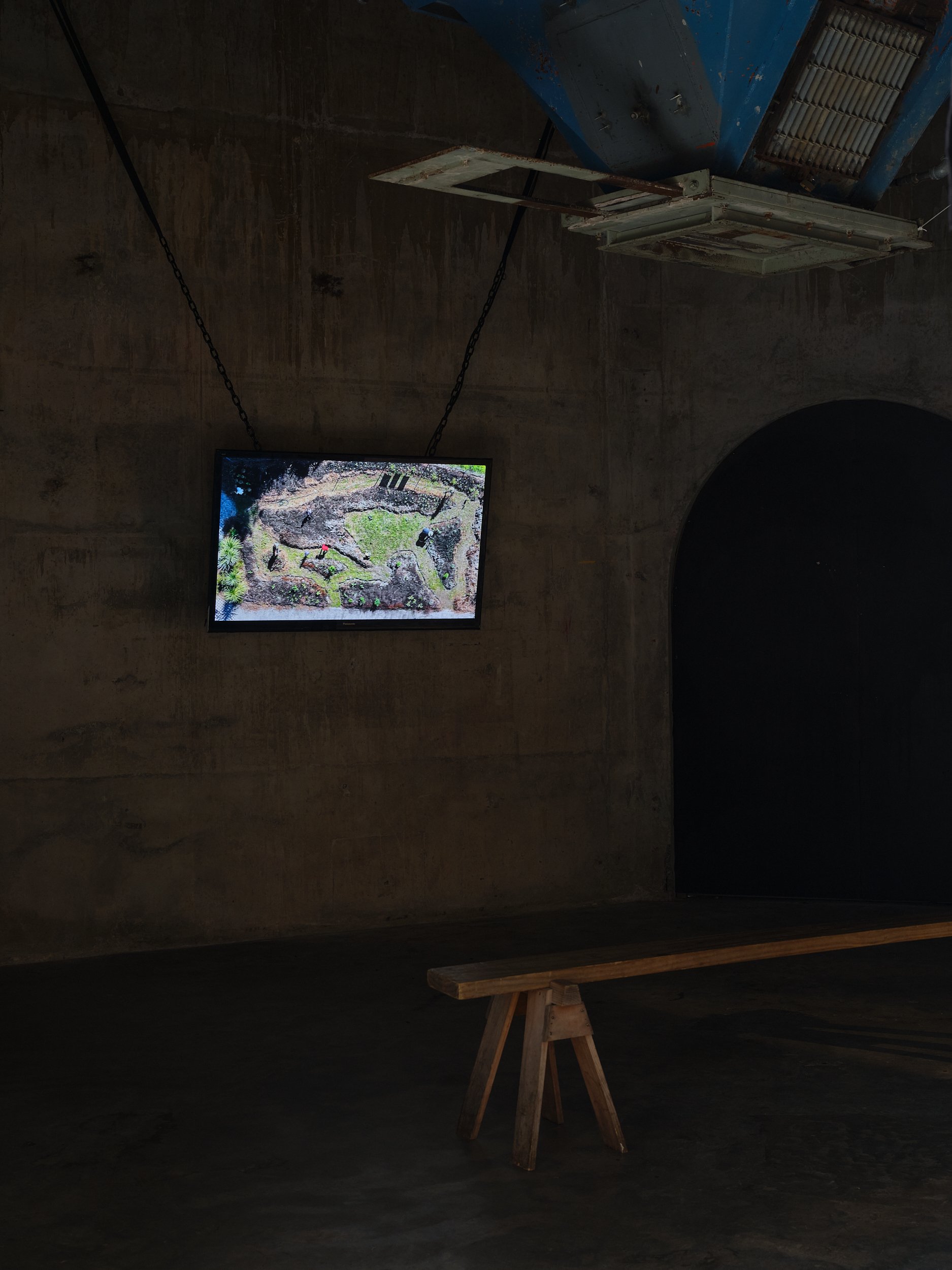
Artist Holli McEntegart presents Inhabit: Iteration 5; Nekehanga, the latest development of her durational social practice project Inhabit, at Silo 6 this September. Since its inception, Inhabit has explored the labour, politics and intimacies of care: first through postpartum care, childbirth and parenting, and increasingly through wider networks of care that extend across bodies, communities and whenua. Nekehanga takes its starting point from a year-long garden project at Papa ki Awataha in Northcote, developed with taiao guidance from Charmaine Bailie (Te Uri o Hau – Ngāti Whātua ki Kaipara). Through the cultivation of flowering plants, Nekehanga extends into natural dye, textiles, sound, performance and moving image, exploring how care might be grown, practised, and received.
The evolution of Inhabit has unfolded alongside a series of profound personal and material transformations. As Ngakinga, the fourth iteration of Inhabit, moved from the care of postpartum bodies towards the restoration and tending of whenua, McEntegart was also caring for her mother through the final stages of her life. Following her mother's death, the project continued to evolve through grief. More recently, after a major car accident and multiple surgeries, McEntegart has found herself in the unfamiliar position of needing care herself. The artist who had spent years examining the labour of tending to others was suddenly required to confront the vulnerability, dependence and complexity of being cared for.
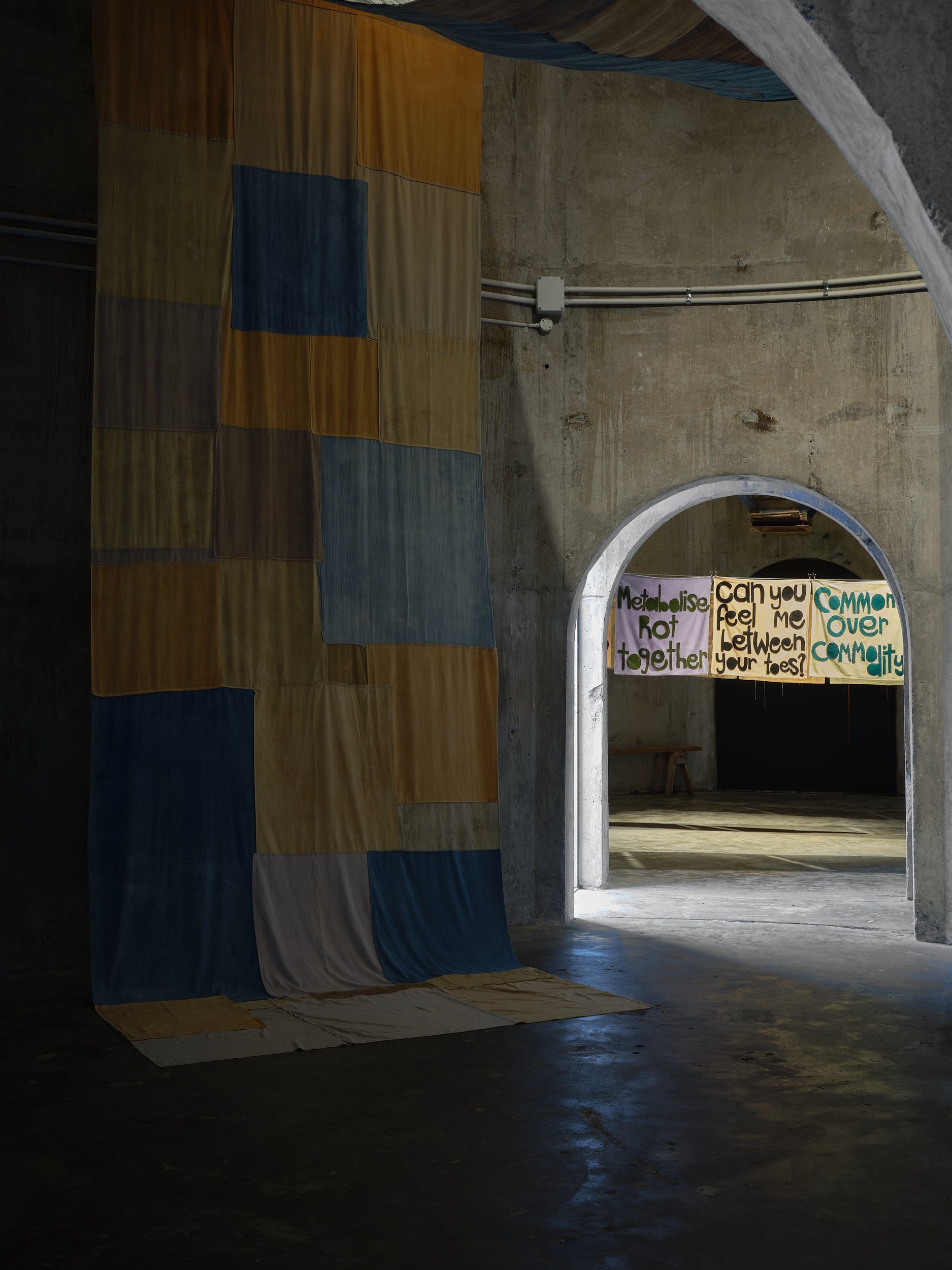
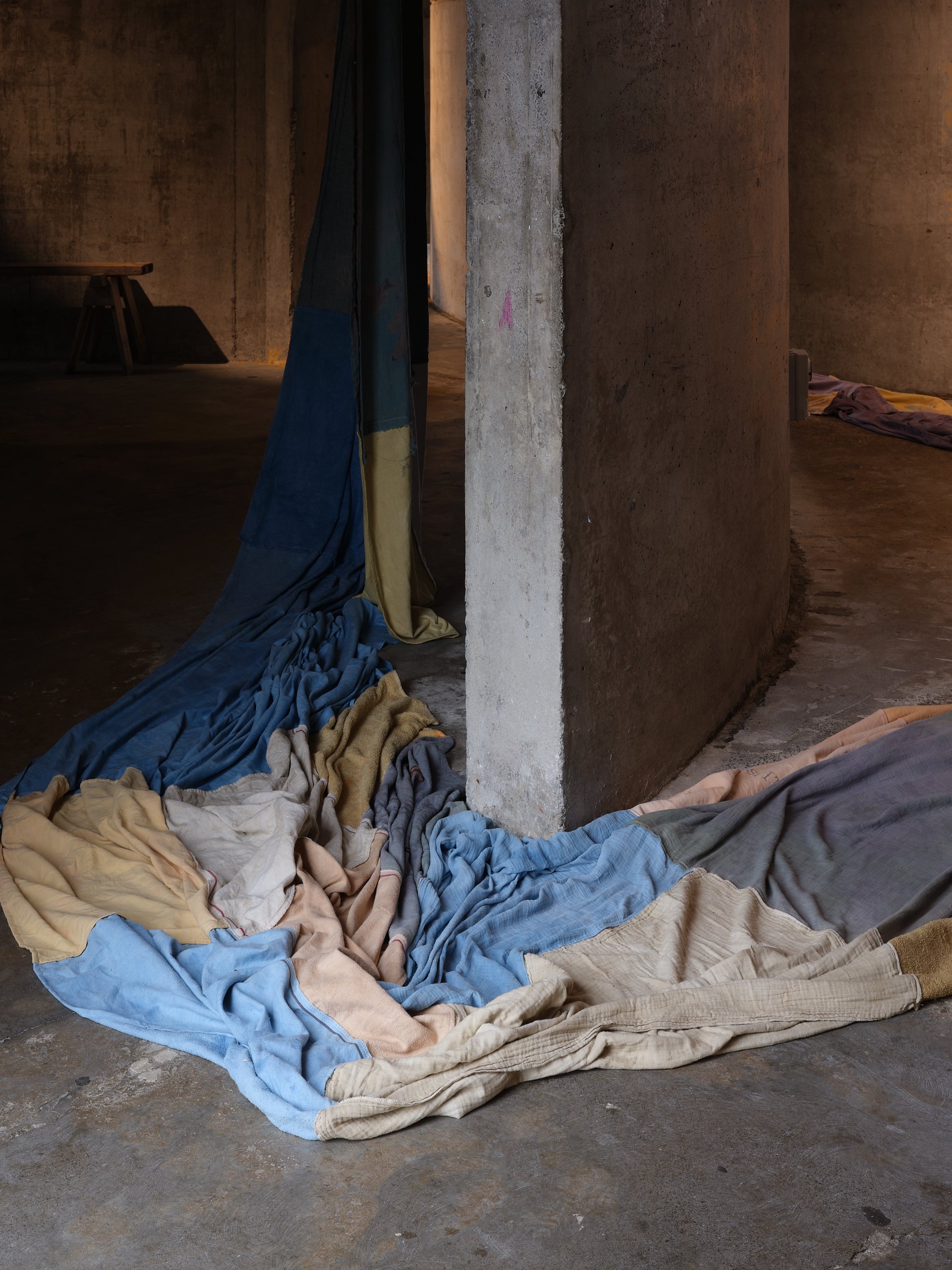
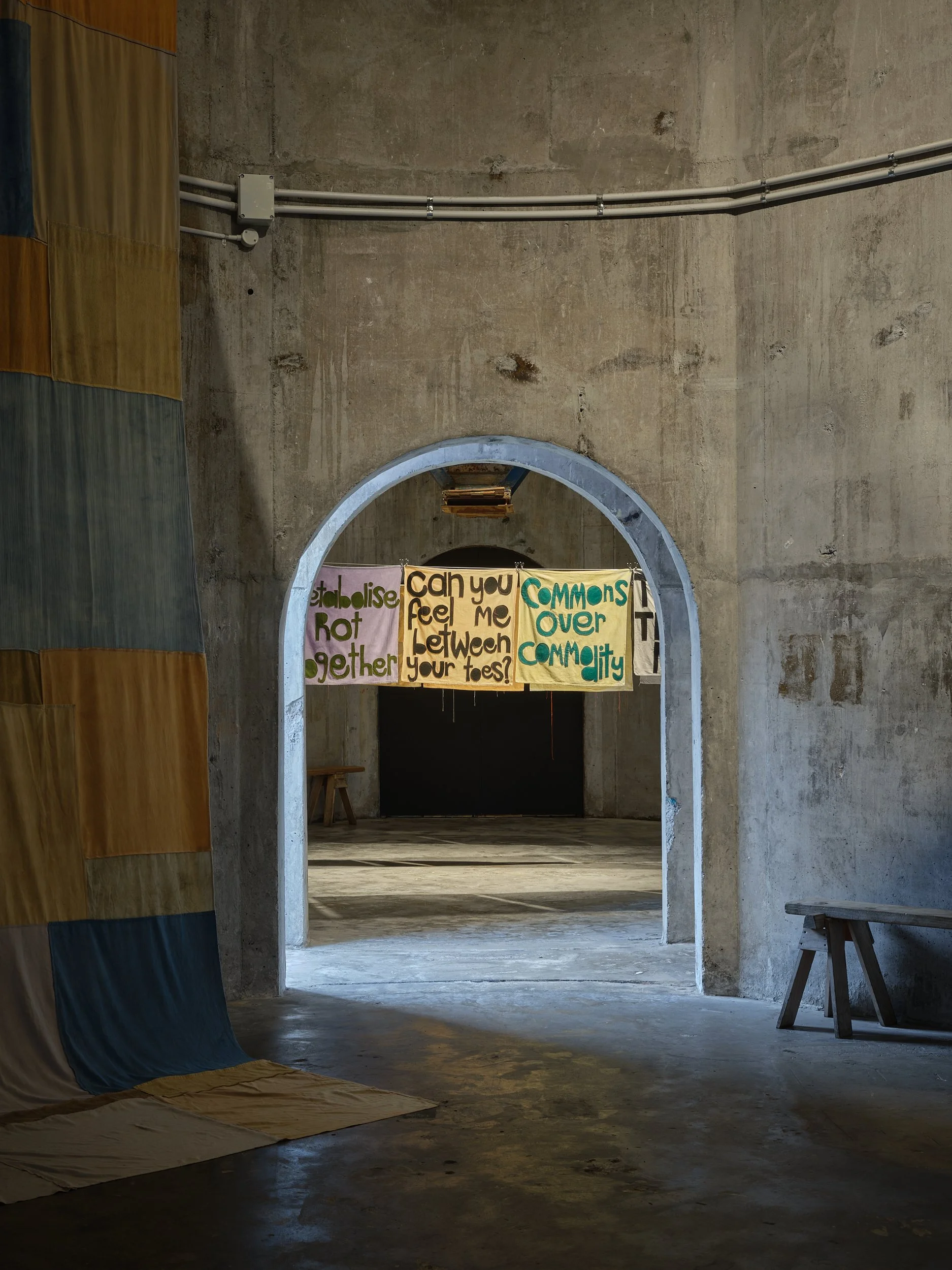
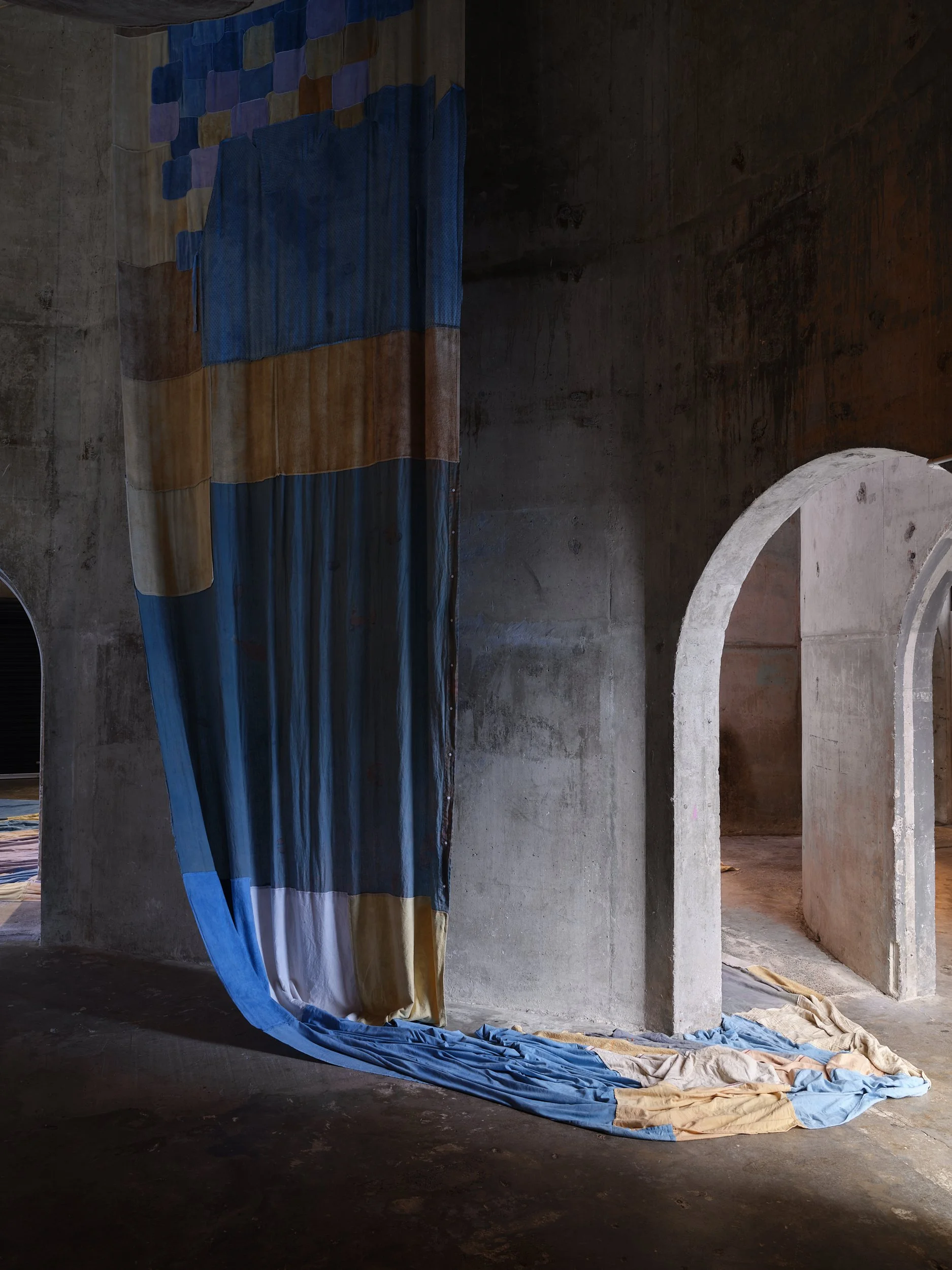
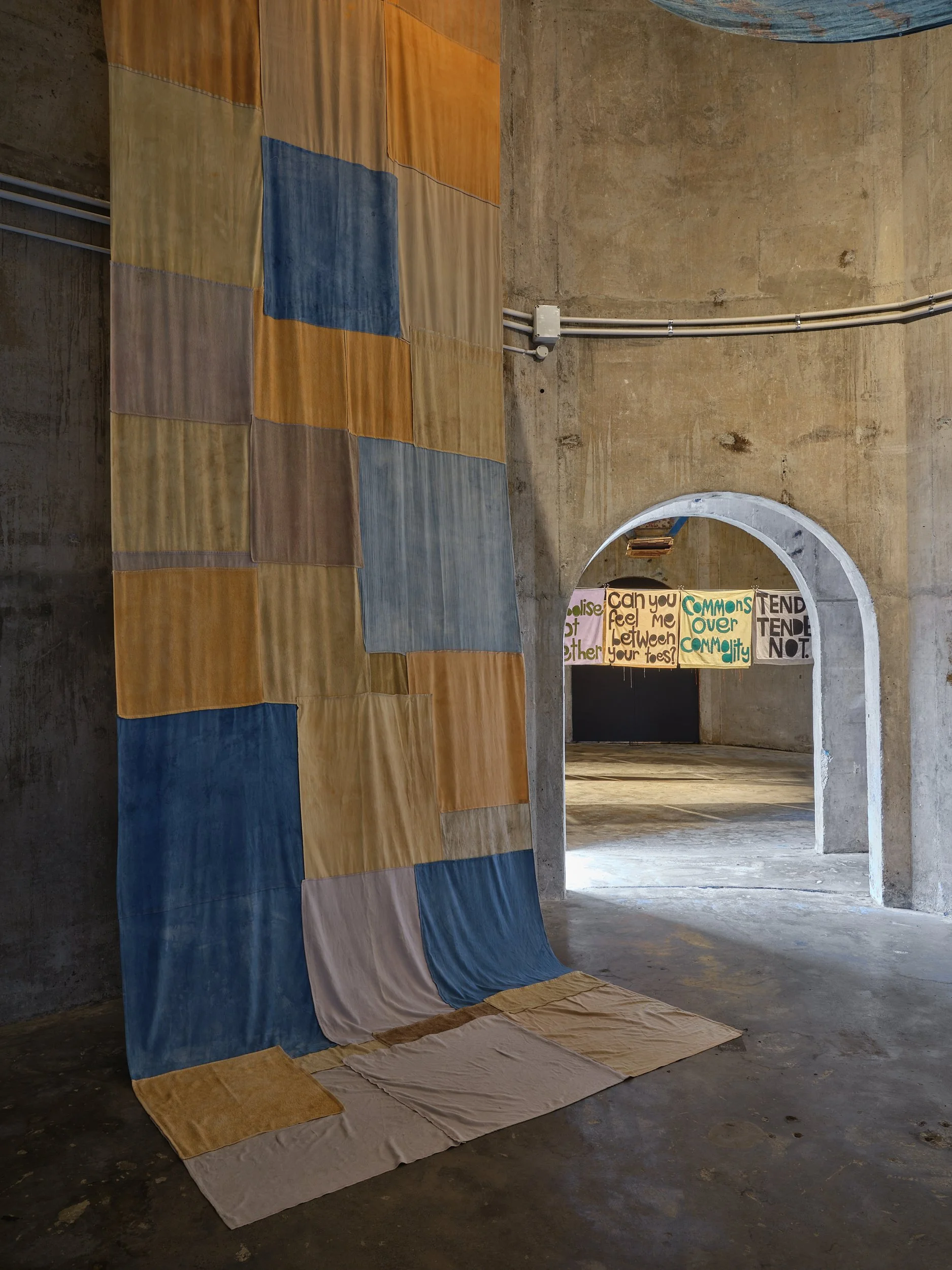
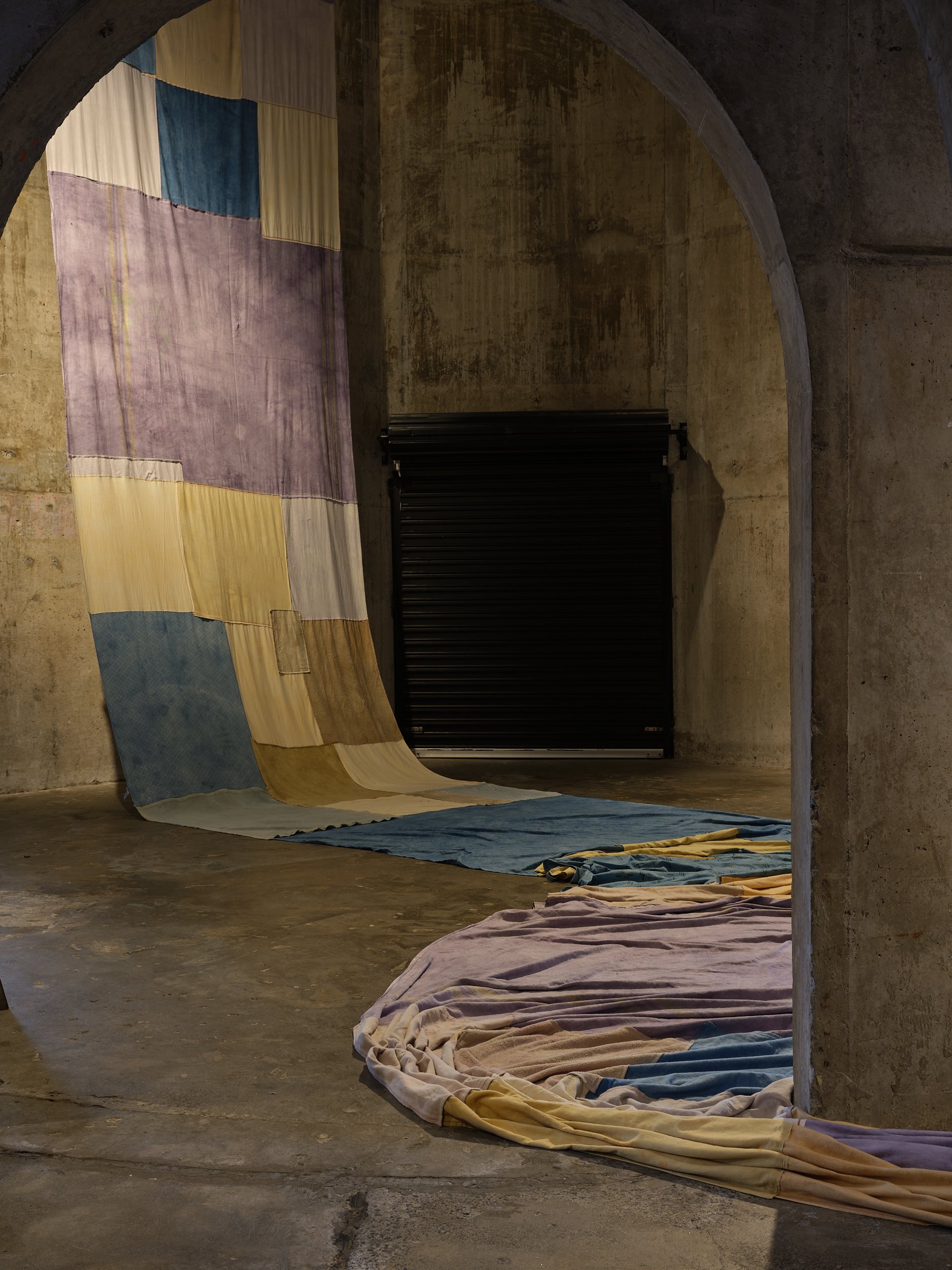
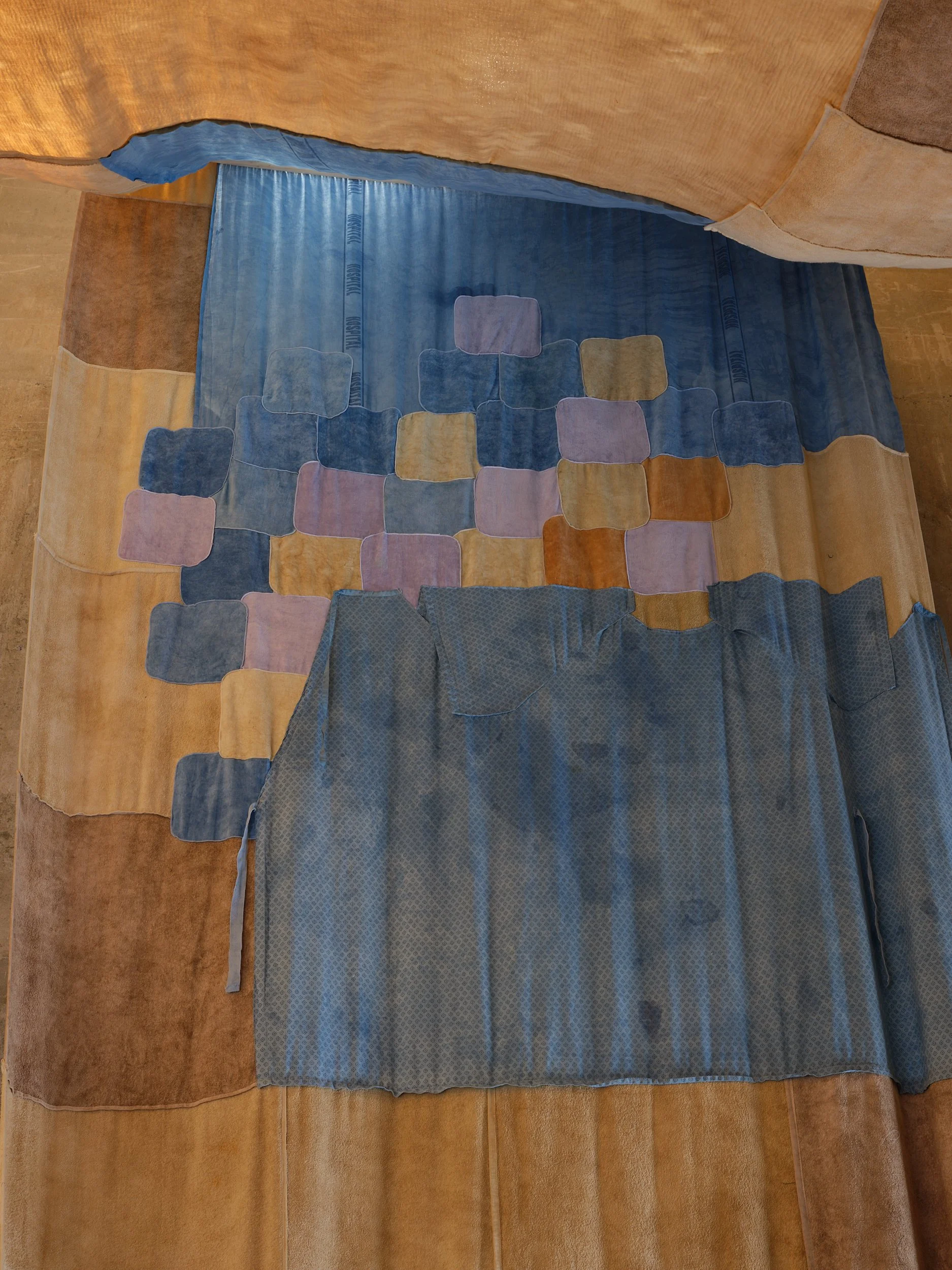
At the centre of Nekehanga are 52 hand-dyed banners, one for every week of the garden's year, made from cotton flat nappies and dyed with flowers grown at Ngakinga. Alongside them is Tend Too, a monumental patchwork assembled from fabrics that have already lived lives of care, including hospital gowns and sheets, nappies, blankets and domestic textiles. Some of these materials have held bodies at their most vulnerable, including McEntegart's mother and, more recently, the artist herself. Through the natural dyeing process, the fabric re-emerges transformed, its accumulated histories revealed through subtle shifts in colour and tone.
“Nekehanga” speaks to movement and transformation. For McEntegart, the project has evolved through a willingness to remain responsive: to follow what the work, the garden and life itself make possible. Plants, weather, soil, grief and community have continually altered its direction. Nekehanga now moves the project to Waiatarau, the name for the bay that once occupied this part of the Tāmaki Makaurau waterfront, before the coastline was reshaped and the whenua extended through land reclamation. Here, the project enters into dialogue with a landscape already undergoing a long process of healing and regeneration, led by mana whenua. McEntegart has developed the exhibition within a framework of intergenerational collective care and reciprocity alongside artist and mentor Judy Darragh.
The exhibition will be activated through a programme of performances, kōrero and natural dye workshops, including Te Pua Rua, a taonga pūoro sunflower orchestra created with Tāmaki Oro Rau.
.This project is supported by Auckland Council.Project website www.inhabitproject.com
Project Collaborators
Charmaine Bailie (Te Uri o Hau – Ngati Whatua ki Kaipara) is an inspirational taiao practitioner working across ecology, ethnobotany and as an active community leader for more than 30 years. Her voluntary work has had a profound impact on communities and the land. She facilities Te Aka Kōtuia, the kaitaki and community nursery network, and Para Kore ki Tamaki, a zero waste program for Maori communities. Char designed and implemented the Ōkahu Rākau nursery and restoration of Whenua Rangatira in Ōrākei, which was the largest urban, Māori-led restoration project in Aotearoa at that time and has become a template for others to learn from. Working on Motutapu with Ngāi Tai Ki Tāmaki, Char helped establish a nursery, developed a kaitiaki team and plan for the planting of 120,000 natives on Hukanui Pā. Char grew up just down the road from the Kaipātiki Project centre and has been involved with Kaipātiki Project since 2000 in many different roles. She is also a Director of Uru Whaakaro Ltd - a natural heritage company and the Winner in Te Toa Taiao o Te Tau / the Environmental Hero of the Year 2022.
Tāmaki Oro Rau is a Tāmaki Makaurau-based taonga pūoro collective of makers, players, and researchers dedicated to the practice, revitalisation, and everyday presence of taonga pūoro. Our long-term collaborators in sound by way of SOMETHING AWKWARD and The Tipuna Project, Tāmaki Oro Rau, helped us harvest the mighty sunflowers at the closing ceremony of Ngakinga in March 2026. Mikaere Berryman-Kamp has gifted the name Te Pua Rua to the sunflower orchestra, meaning "the second bloom”, rua also referring to a grave, or the place where heavenly bodies (sun, moon) set and rise.
The Tīpuna Project (TTP) is a community-based collective of Māori and Tauiwi activists, artists and academics who experiment with the decolonial potential of communing with ancestors - Indigenous, settler, pagan, non-human. Nekehangais affiliated with our Pākehā collective, as led by Rachel Jane Liebert. We commit to strange and participatory research with (not on) our ancestors, moving our white settler bodies into entanglement, accountability and Matike Mai - an Indigenous-led, nationwide movement to finally transform the constitution in line with Te Tiriti o Waitangi.